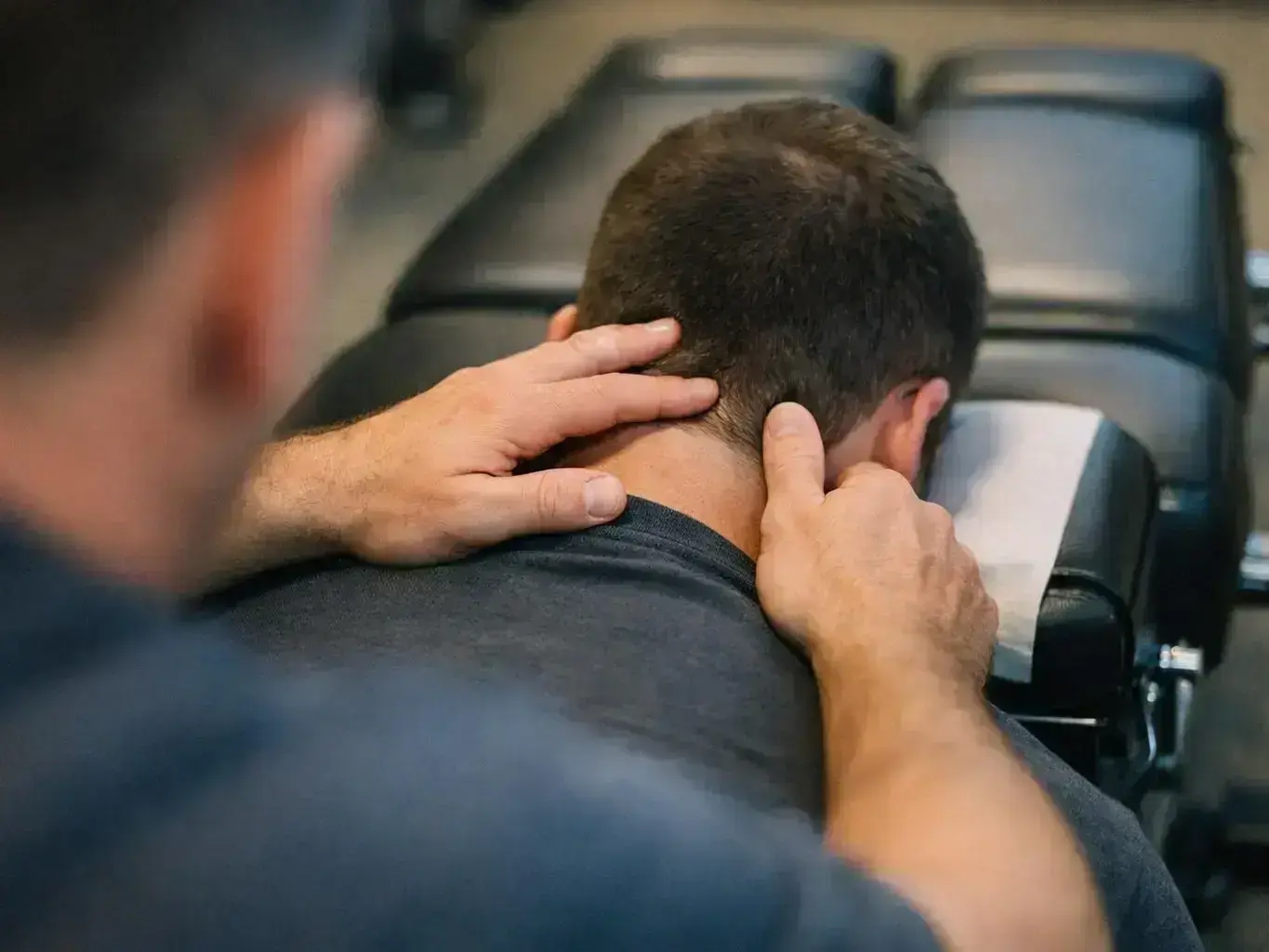
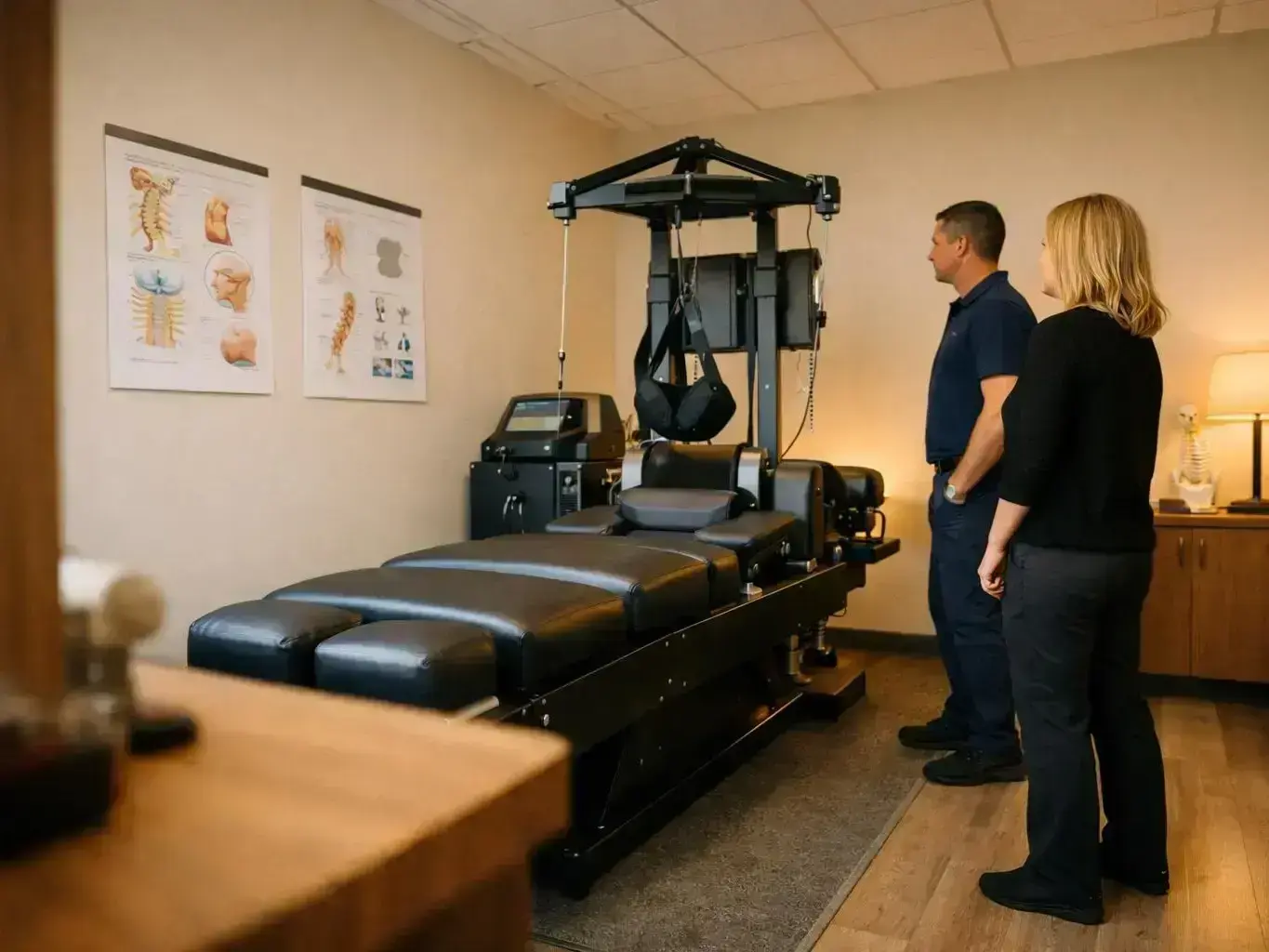
Vertebral Subluxation Complex is a chiropractic term describing a functional or structural problem in the spine where vertebrae misalign, disrupting nerve function, joint movement. And overall health. It involves changes in muscle tension, inflammation. And nerve irritation, often leading to pain, reduced mobility. Or systemic symptoms without immediate injury signs.
Category
Chiropractic and spinal health
Used for
Diagnosing and treating spine-related dysfunction
Common confusion
Often mistaken for medical subluxation (partial dislocation)
Also called
VSC, Subluxation (chiropractic)
Often discussed with
Chiropractic Consultation and Diagnosis

VSC is key in chiropractic care. It means bones in the spine get out of place. They may not move right.
Related glossary terms: Adjustment, Chiropractic Adjustment, Nerve Compression.
This is not like a joint that pops out. VSC looks at small changes. You might not see them on X-rays.
These changes can hurt your nerves. They may cause pain or tight muscles. Over time, they can affect your organs too.
The word "complex" means it's not just bones. It includes muscles, ligaments. And nerves. It can affect blood flow too.
A crooked bone might pinch a nerve. This can cause back pain. Pain may shoot down your arm or leg.
It can also cause swelling. Muscles may spasm. You might feel stiff. Daily tasks can become hard.
Your nerves control everything. They help you move and digest food. So spine problems can affect many things.
Chiropractors check for VSC. They do exams and ask about your health. They may use X-rays too.
They look for stiff joints. They check for sore spots. They see if muscles feel tight.
They may notice if your posture looks uneven. They check if bones don't move freely.
They look for pinched nerves. They test your reflexes. They check muscle strength and feeling.
Treatment often uses adjustments. These are also called spinal manipulations. They help put bones back in place.
Adjustments use quick, gentle pushes. Other treatments may help too. These include stretching or exercises.
Soft tissue work can ease muscle tension. The goal is to help nerves work right. This lets your body heal.
Some people feel better right away. Others need more visits. This is true for long-term problems.

VSC matters for comfort and health. Small spine issues can cause big problems. They may lead to long-term pain.
They can cause headaches or tiredness. Over time, they may wear down joints. They can hurt discs too.
Fixing VSC helps nerves work right. This can ease pain. It can help you move better.
Many people want their body to work its best. They see chiropractors for this. They don't just want pain relief.
VSC can affect daily life. A crooked bone may cause bad posture. This can lead to headaches.
It may make sleeping hard. Some people get stomach problems. Others feel numb or moody.
Nerves may get irritated. Fixing VSC helps your body stay balanced. This makes staying active easier.
VSC often happens after injuries. It can come from stress or bad posture. Car accidents can cause it.
Sports injuries can too. So can lifting heavy things. Sitting too long at a desk can cause it.
Small things can cause VSC. Slipping on a wet floor may do it. So can sleeping in a weird position.
If you feel sudden pain, think of VSC. Stiffness or less movement may mean it too. See a chiropractor if it lasts.
VSC matters for prevention too. Many see chiropractors to stay healthy. They don't wait for pain.
Check-ups can catch small problems. This keeps them from getting worse. It helps you stay active.
Athletes may get regular adjustments. So may people with tough jobs. This keeps their spine healthy.
It can lower injury risk. This is good for anyone who moves a lot.

Joint dysfunction refers to any joint not moving properly. While Vertebral Subluxation Complex specifically involves the spine and its impact on nerves.
Medical subluxation means a partial dislocation visible on imaging. While chiropractic VSC focuses on functional misalignments affecting nerve function.
Disc herniation involves a damaged spinal disc pressing on nerves. While VSC is about misaligned vertebrae and their broader effects on the body.
Vertebral Subluxation Complex often develops gradually, making it easy to overlook until symptoms become chronic. Early intervention can prevent long-term issues like joint degeneration or nerve damage.
After a minor car accident, a patient notices stiffness in their neck and occasional headaches. A chiropractor examines their spine and finds restricted movement in the upper vertebrae, along with muscle tension. The patient is diagnosed with Vertebral Subluxation Complex and receives adjustments to restore alignment, reducing headaches and improving mobility over a few weeks.
Adjustment is a precise manual procedure performed by a chiropractor to correct misalignments in the spine or joints. These misalignments, called subluxations, can cause pain, reduced mobility. Or nerve interference. Adjustments restore proper alignment, improve function. And support the body’s natural healing process without surgery or medication.
Chiropractic Adjustment is a hands-on procedure where a licensed chiropractor applies controlled force to a specific joint in the spine or other body part to improve alignment, reduce pain. And restore movement. These adjustments are often performed using the chiropractor’s hands or a small instrument and may produce a popping sound as gas releases from the joint.
Nerve Compression is a condition where surrounding tissues such as bones, cartilage, muscles. Or tendons press against a nerve, disrupting its function. This pressure can cause pain, tingling, numbness. Or weakness in the affected area. Nerve Compression often occurs in the spine, wrists. Or elbows and may result from injury, repetitive motion.
Joint Dysfunction is a condition where a joint in the body moves improperly or loses its normal range of motion, often causing pain, stiffness. Or inflammation. It can result from injury, overuse, poor posture. Or underlying conditions like arthritis. Joint Dysfunction may affect any joint, including the spine, shoulders, hips.
Spinal Adjustment is a manual procedure performed by a chiropractor to apply controlled force to a specific joint in the spine. The goal is to improve spinal motion, reduce nerve irritation. And restore proper alignment to help the body function better and relieve pain without surgery or medication.
ChiropractorSavannah.com
Contact ChiropractorSavannah.com for practical guidance on Vertebral Subluxation Complex and related chiropractor work in Savannah.