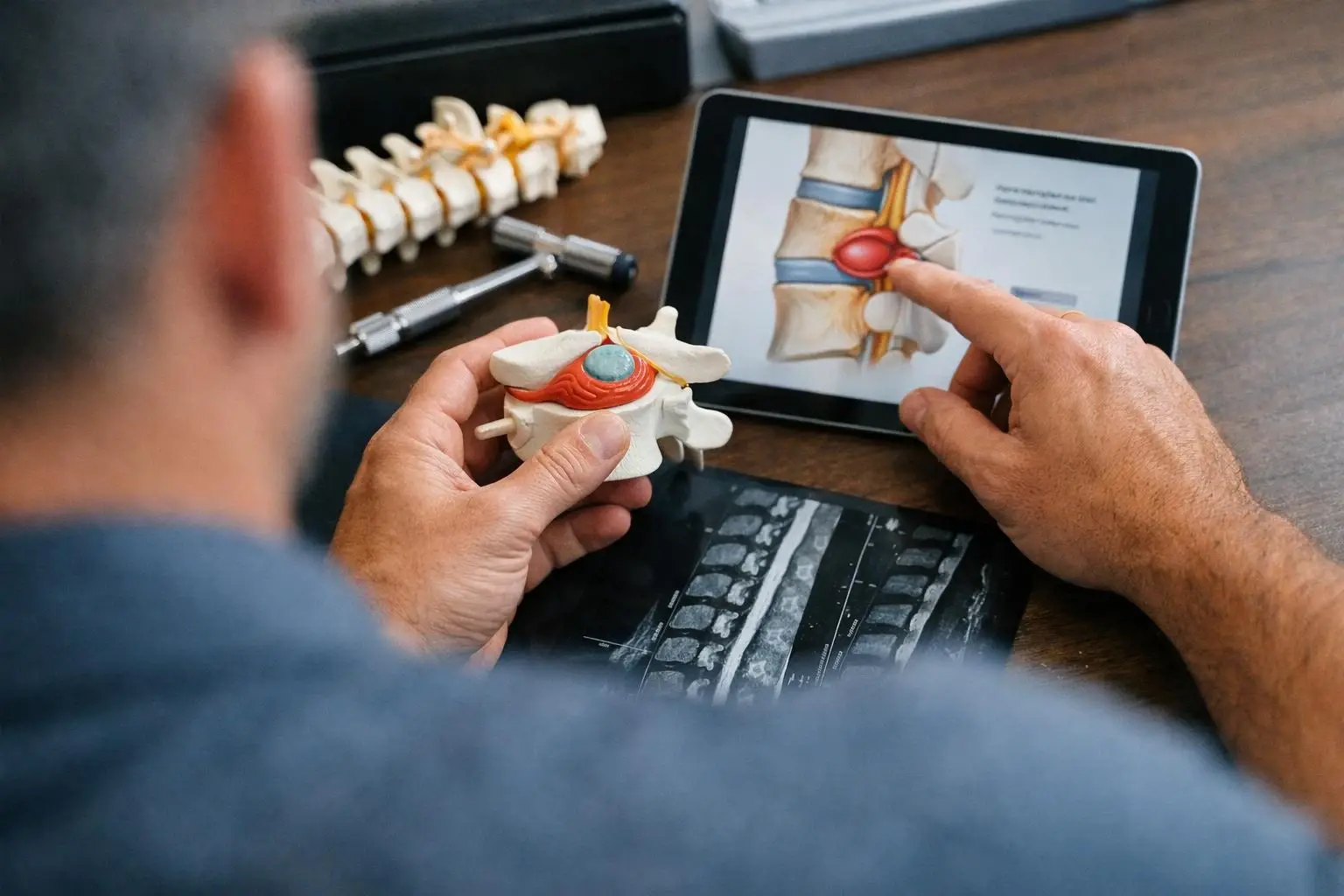
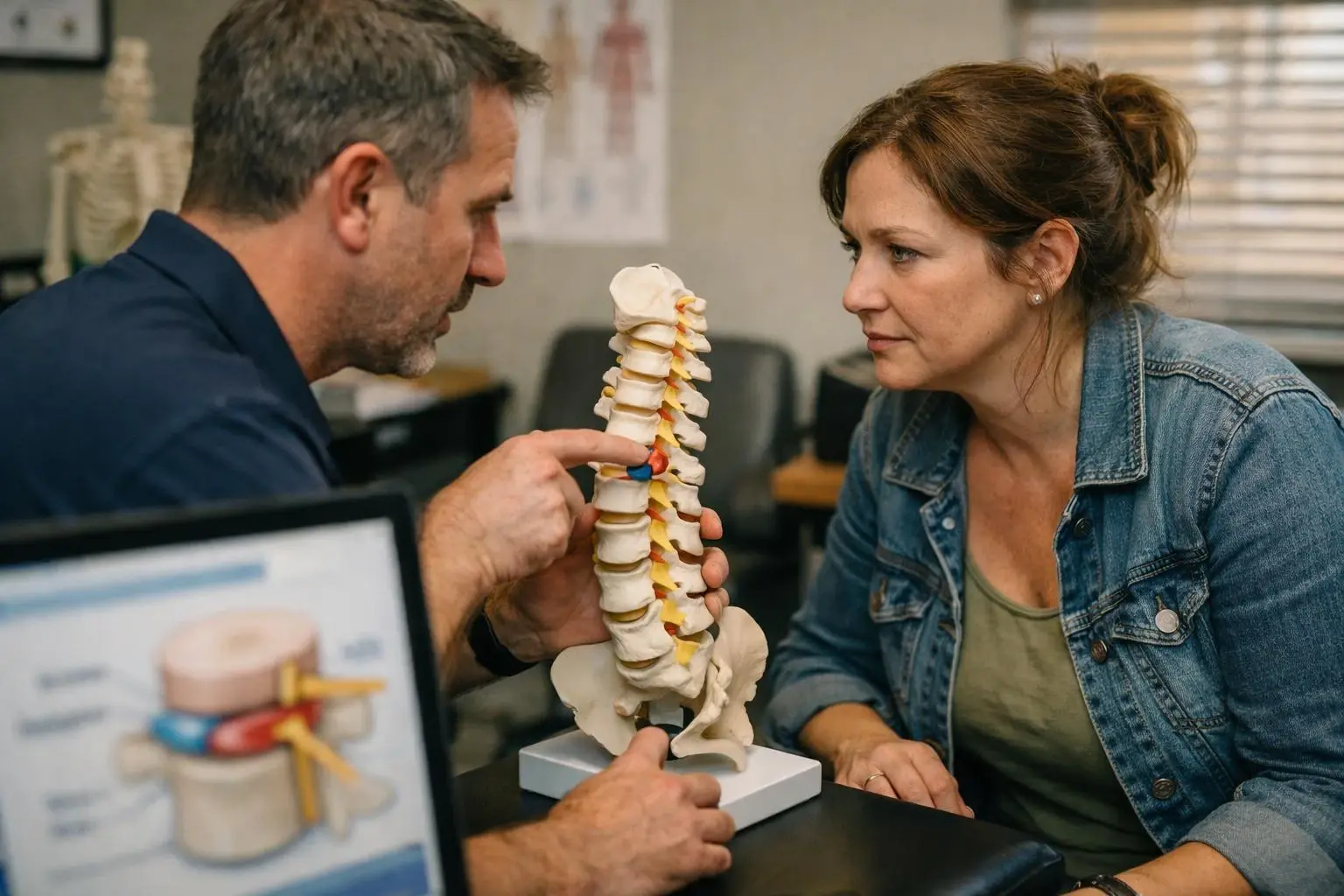
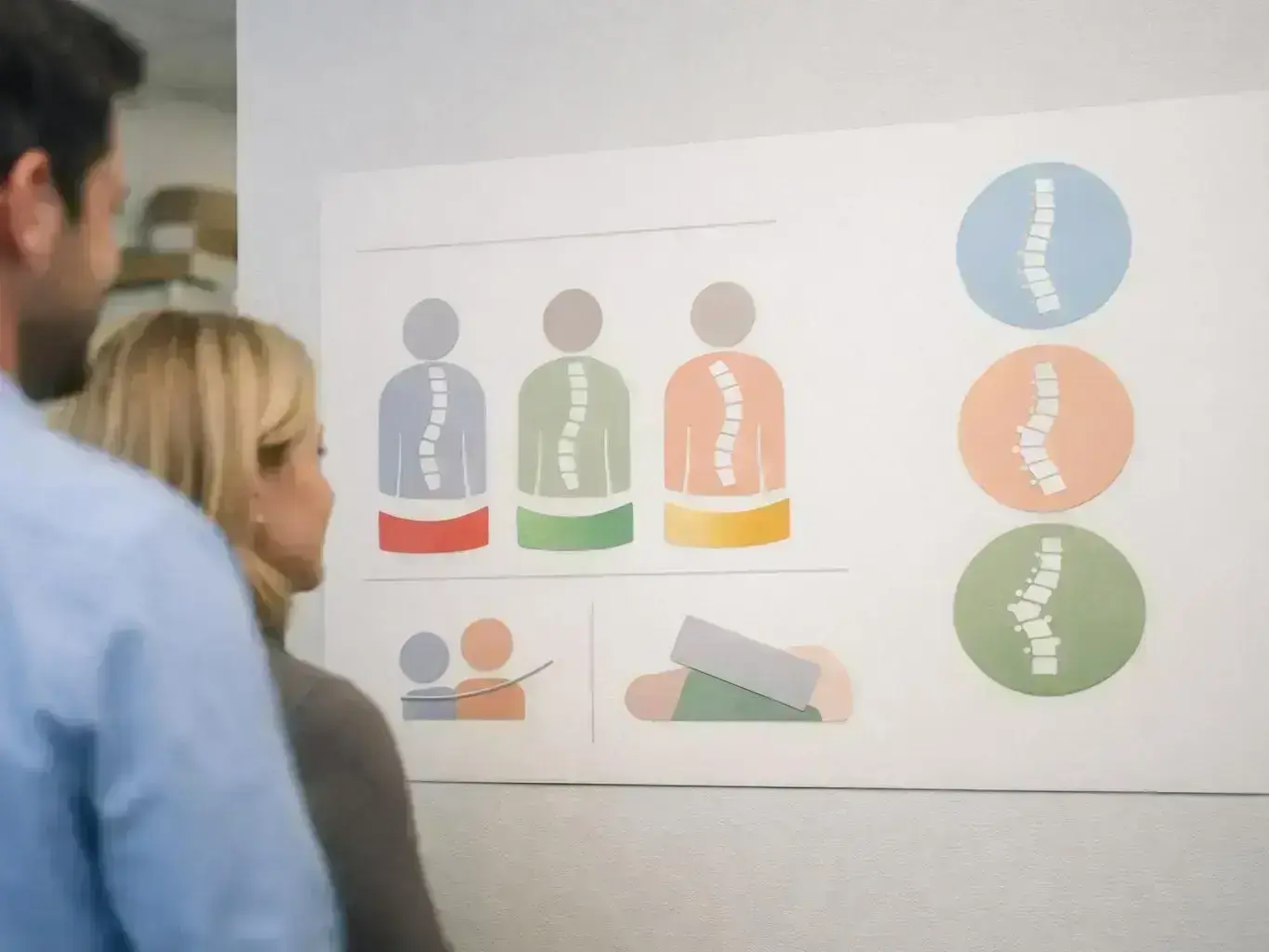
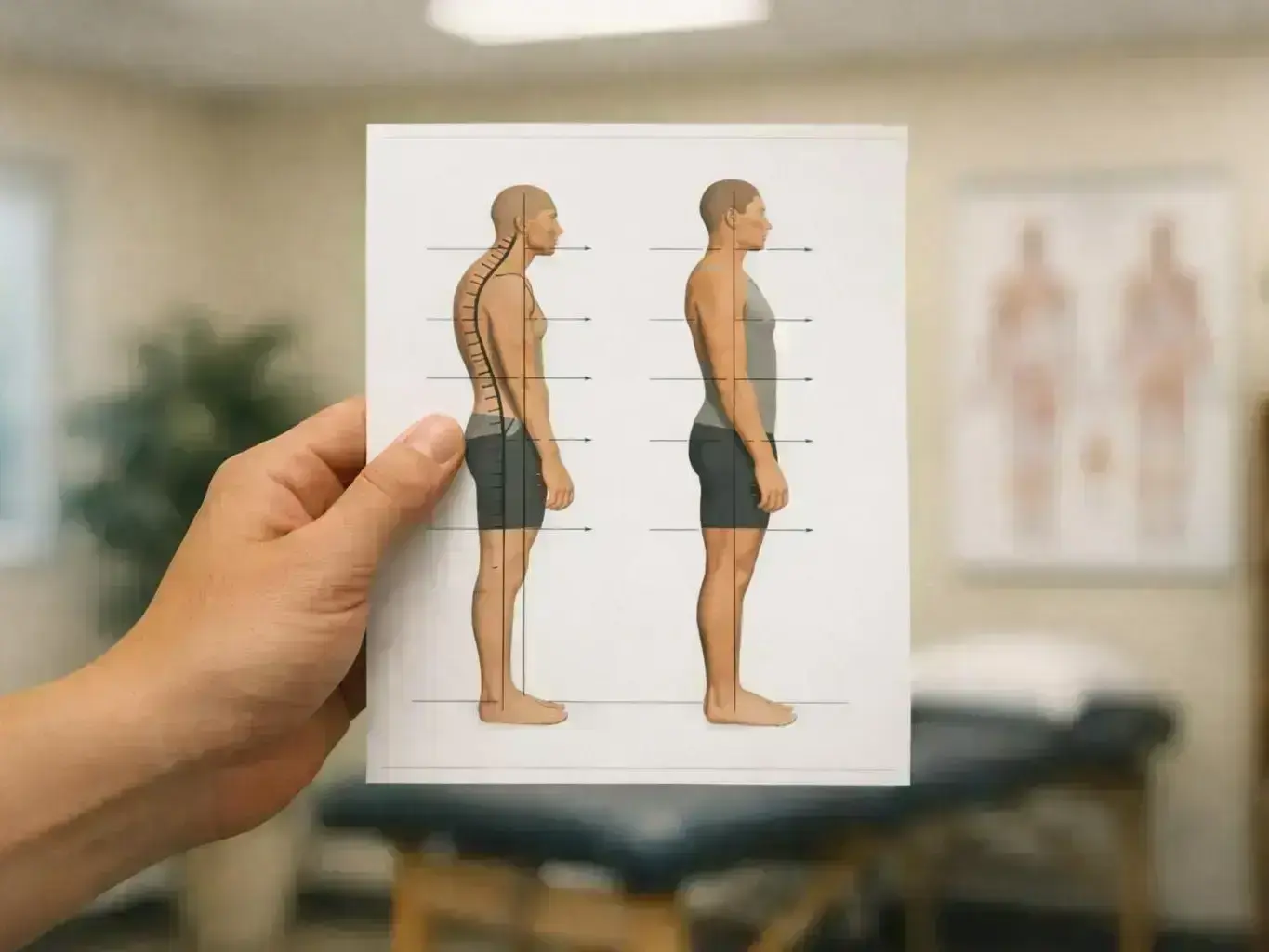
Disc Herniation is a spinal condition where the soft, gel-like center of a spinal disc pushes through a tear in its tough outer layer. This can irritate nearby nerves, causing pain, numbness. Or weakness in the back, neck, arms. Or legs. Disc Herniation often results from wear-and-tear, injury. Or improper lifting.
Category
Spinal injury
Used for
Diagnosing nerve-related back or neck pain
Common confusion
Often mistaken for muscle strain or arthritis
Also called
Herniated Disc, Slipped Disc
Often discussed with
Chiropractic Consultation and Diagnosis, Work Injury Treatment

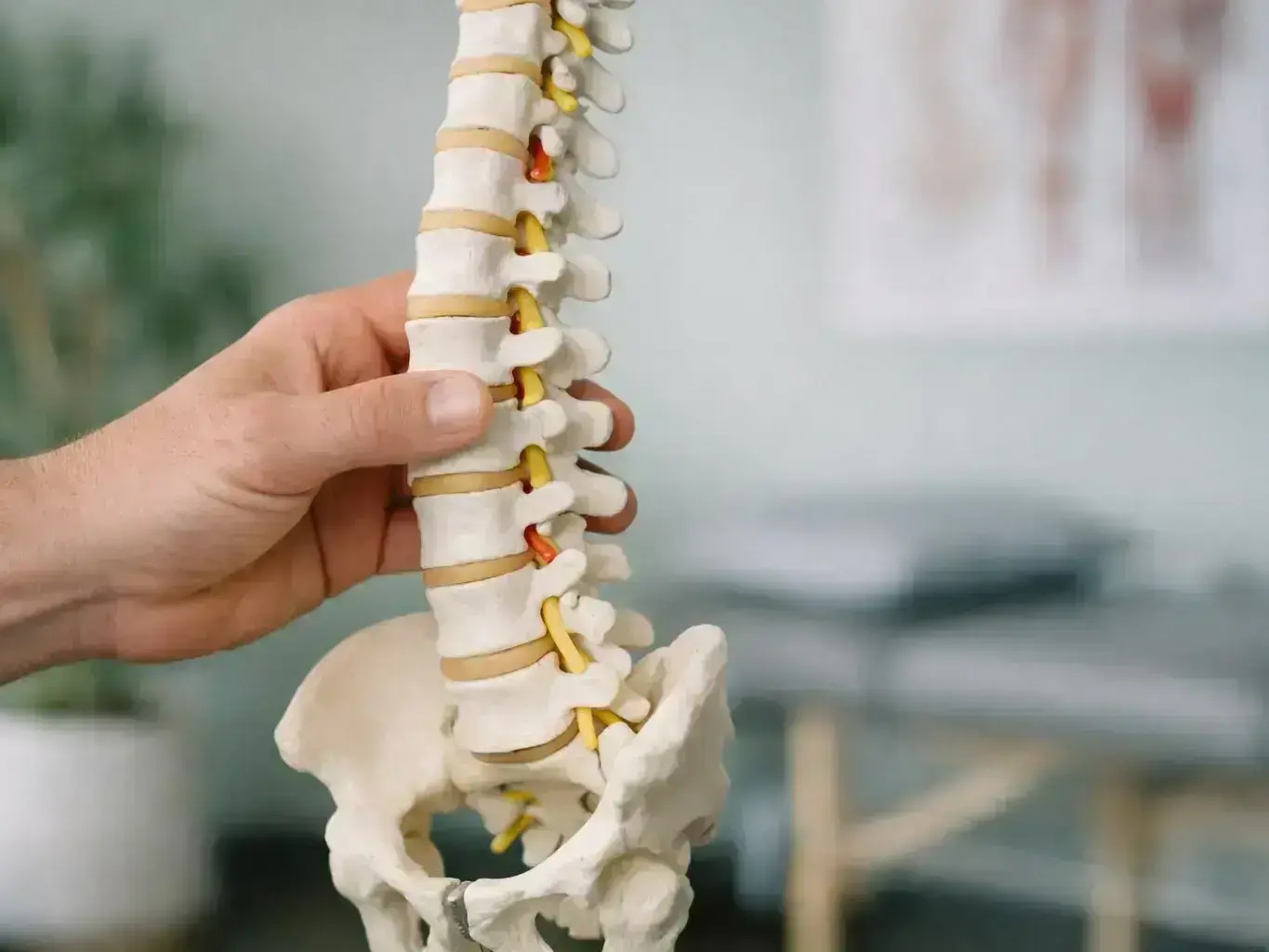
A disc herniation happens when the soft center of a spinal disc leaks out. The spine has bones called vertebrae. Between each bone is a disc that acts like a cushion.
Related glossary terms: Back Pain, Spinal Adjustment, Chiropractic Care.
These discs absorb shock. They help the spine move smoothly. Over time, discs can wear down or get hurt.
This can cause a herniation. The inner jelly leaks out. It can press on nerves nearby.
This pressure causes pain. It may cause tingling or weakness. The pain is where the nerve goes.
This problem is common in the lower back. It's also common in the neck. The lower back is called the lumbar spine.
The neck is called the cervical spine. In the lower back, it often causes sciatica. Sciatica is a sharp pain down the leg.
In the neck, it may cause shoulder pain. It can also cause arm or hand numbness. Aging is a natural cause.
Sudden injuries can also cause it. Lifting heavy things wrong can trigger it. Most people get better without surgery.
But bad cases may need help. Doctors can relieve nerve pressure.
Spinal discs have two parts. The outer ring is tough. It's called the annulus fibrosus.
The center is soft and gel-like. It's called the nucleus pulposus. The outer ring can weaken or tear.
Then the inner gel bulges out. If the tear is big, the gel leaks out. It presses on spinal nerves.
This pressure messes up nerve signals. It causes pain or numbness. It can also make muscles weak.
Doctors use tests to find herniated discs. MRI or CT scans show the disc. They show how it affects nerves.
Doctors also do physical exams. They check for pain when bending. They check for pain when lifting.
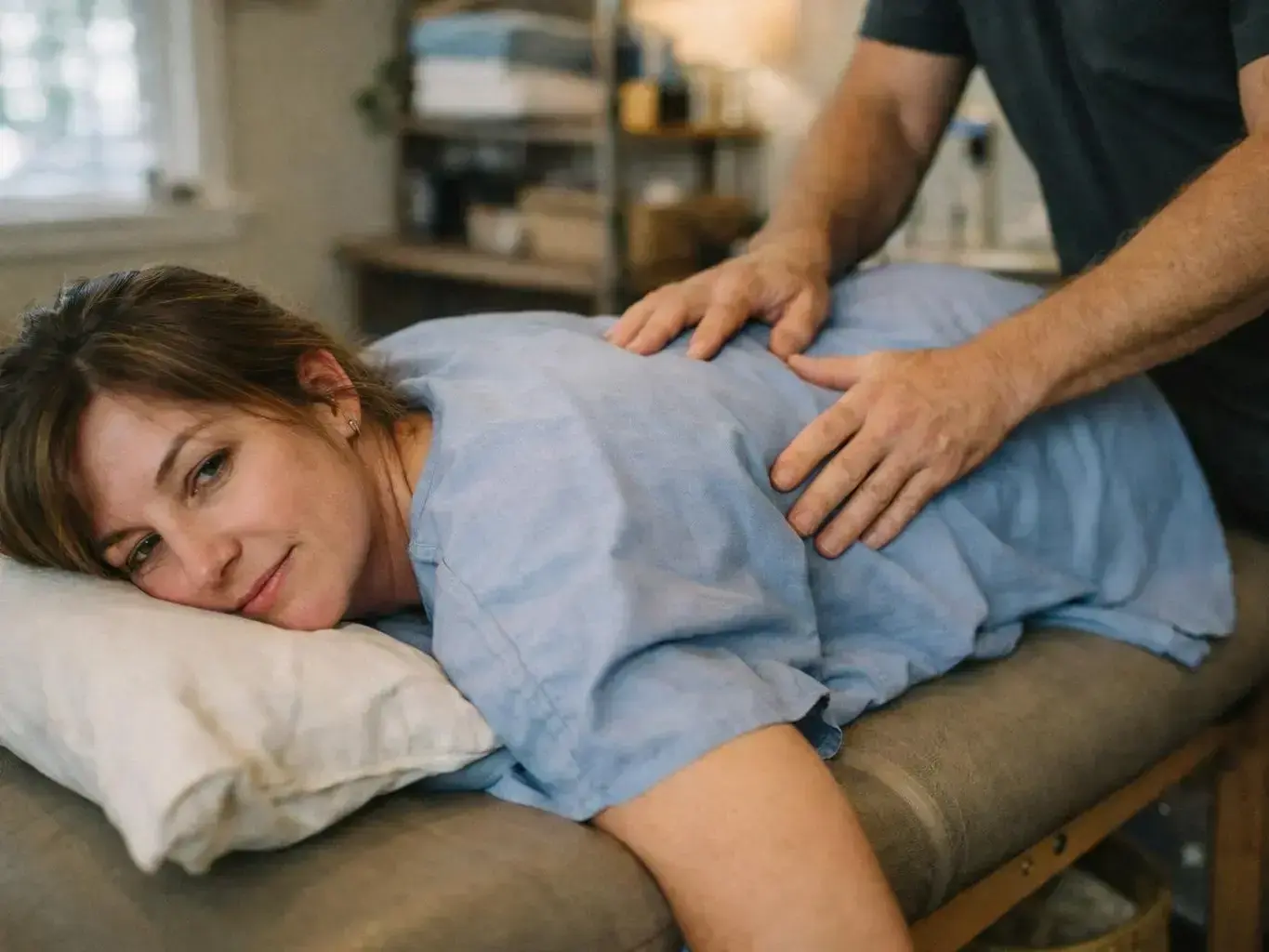
Herniated discs can heal on their own. Some treatments help them heal faster. Chiropractic care can help.
Physical therapy can help too. So can medicine. Rarely, surgery is needed.
Surgery removes the leaked gel. It relieves nerve pressure.

Disc herniation can hurt daily life. Simple tasks become hard. Sitting, standing. Or lifting can hurt.
When nerves are pressed, pain spreads. It can go to arms or legs. It can make moving hard.
Untreated herniated discs can cause big problems. They can cause long-term pain. They can also cause nerve damage.
Early diagnosis helps. Early treatment helps too. They prevent worse problems.
They also improve life quality. Good habits can prevent disc problems. Practice good posture.
Lift things the right way. Stay active. These habits help your spine.
If you have symptoms, know what to do. Learn about the problem. Learn about treatments.
This helps you get the right care. Avoid things that make it worse.
Disc herniation is a problem when it hurts daily life. Pain, numbness. Or weakness get in the way.
Someone with a bad lower-back disc may struggle. Sitting too long may hurt. Walking or lifting may hurt too.
In the neck, it can make driving hard. Typing may hurt. Sleeping may be uncomfortable.
If symptoms get worse, get help fast. Losing bladder control is a bad sign. This may mean cauda equina syndrome.
Some jobs raise the risk. Heavy lifting is one. Doing the same motion over and over is another.
Sitting too long is also bad. Athletes, builders. And office workers are at risk. Know the early signs.
Back pain that won't go away is one. Tingling in arms or legs is another. Get help before it gets worse.
Chiropractic care can help. So can physical therapy. Changing habits can help too.
These things manage symptoms. They help people get back to normal.
A bulging disc occurs when the disc’s outer layer weakens and extends outward. But the inner gel stays intact. Disc Herniation involves a tear in the outer layer, allowing the gel to leak out.
Sciatica is a symptom—sharp leg pain—often caused by a herniated disc pressing on the sciatic nerve. Disc Herniation is the underlying condition that may lead to sciatica.
Disc Herniation doesn’t always cause pain. Some people have herniated discs without symptoms. While others experience severe discomfort. Imaging tests help confirm the diagnosis. But symptoms guide treatment decisions.
A warehouse worker lifts a heavy box incorrectly, feeling a sharp pain in his lower back. Over the next few days, the pain spreads down his leg, along with tingling in his foot. An MRI reveals a herniated disc pressing on a nerve, causing sciatica. Rest, chiropractic adjustments. And physical therapy help him recover without surgery.
Back Pain is discomfort or pain anywhere along the spine, from the neck down to the lower back. It can feel sharp, dull, aching. Or burning. And may be constant or come and go. Back Pain often results from muscle strain, injury, poor posture. Or underlying conditions like disc herniation or arthritis. It affects daily activities and can range from mild to severe.
Spinal Adjustment is a controlled, precise force applied to a joint in the spine to restore proper movement and alignment. Performed by licensed chiropractors, it aims to reduce pain, improve function. And support the body’s natural healing process. The technique may involve hands or specialized instruments and is tailored to each patient’s condition.
Chiropractic Care is a health care profession focused on diagnosing and treating musculoskeletal disorders, especially those related to the spine. Chiropractic Care uses hands-on spinal adjustments and other techniques to improve alignment, relieve pain. And support the body’s natural ability to heal without surgery or medication. It's commonly used for back pain, neck pain, headaches.
Decompression Therapy is a non-surgical treatment designed to relieve pressure on the spine and affected nerves. Decompression Therapy uses controlled traction to gently stretch the spine, creating negative pressure within spinal discs. This process helps retract herniated or bulging discs, promoting the movement of water, oxygen.
Arrowhead Clinic Chiropractor
Contact Arrowhead Clinic Chiropractor for practical guidance on Disc Herniation and related chiropractor work in Savannah.