Glossary

What is Back Pain?

Back Pain is discomfort or pain anywhere along the spine, from the neck down to the lower back. It can feel sharp, dull, aching. Or burning. And may be constant or come and go. Back Pain often results from muscle strain, injury, poor posture. Or underlying conditions like disc herniation or arthritis. It affects daily activities and can range from mild to severe.

Reviewed by Dr. Harry W. Brown, D.C.Sources reviewed: National Institute of Neurological Disorders and Stroke, Mayo Clinic

Quick Facts About Back Pain

Category

Musculoskeletal condition

Used for

Diagnosing spinal discomfort or injury

Common confusion

Often mistaken for kidney pain or simple fatigue

Also called

Spinal Pain, Backache

Often discussed with

Chiropractic Consultation and Diagnosis, Work Injury Treatment

Key Takeaways About Back Pain

Understanding Back Pain

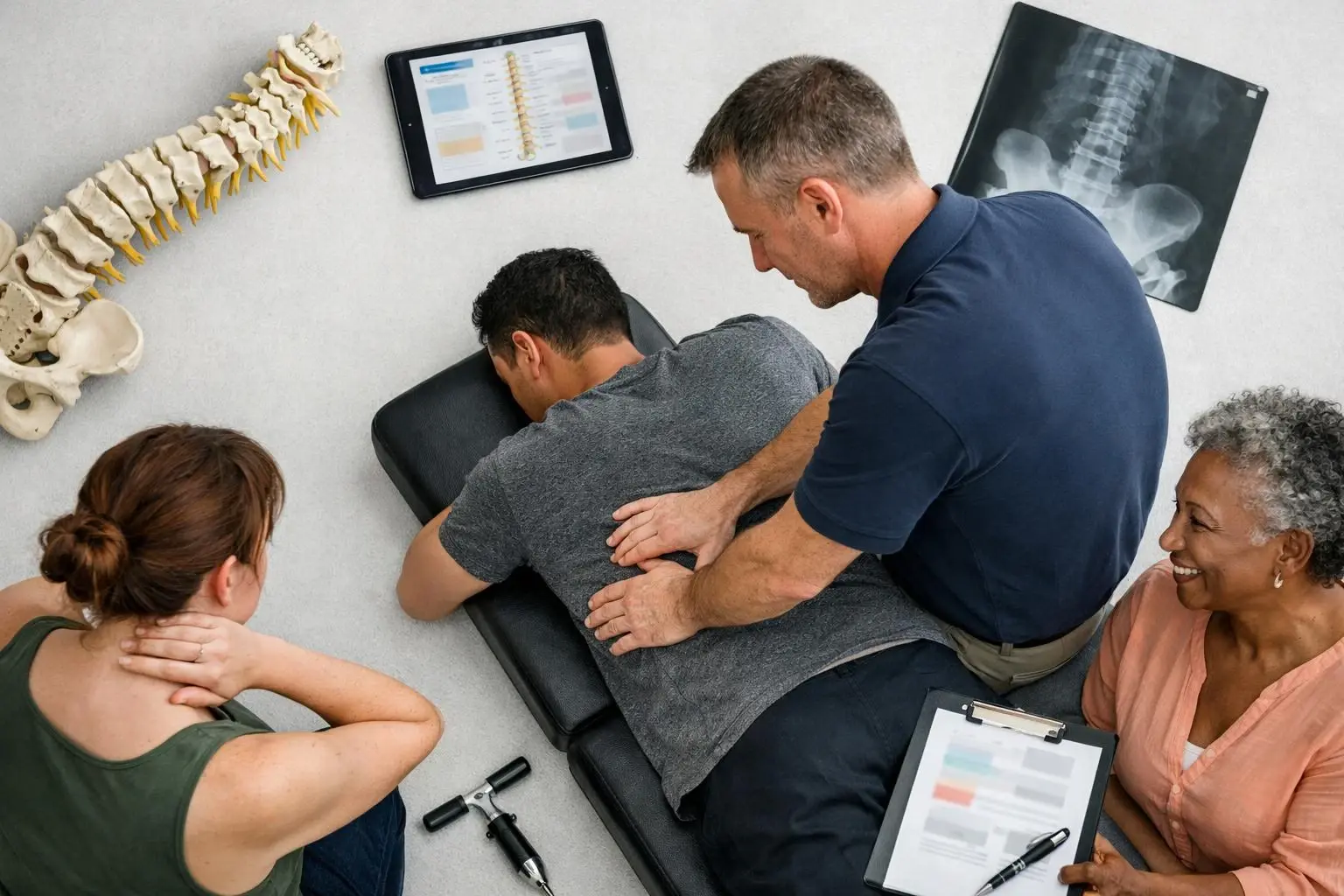
Back Pain in Chiropractor: Back Pain is discomfort or pain anywhere along the spine, from the—visual guide

Back pain hits millions every year. It can start in any part of your back. This includes the upper, middle. Or lower spine.

Related glossary terms: Low Back Pain, Disc Herniation, Spinal Manipulation.

Pain may come fast. It might happen after lifting something heavy. Or it can start slow. Poor posture or doing the same move over and over causes it.

Back pain can be short-term. It may last a few days or weeks. Or it can be long-term. Long-term pain lasts months or even years.

Most back pain isn't serious. It often gets better with self-care. But sometimes it means something worse is wrong.

Pain that shoots down your legs is a sign. So are numbness or weakness. These may mean a nerve problem like sciatica (pain from a pinched nerve).

Knowing the type and spot of pain helps. It tells you what's wrong. Then you can pick the right treatment.

Most back pain comes from how your spine moves. It's not from diseases like infections or cancer.

How Back Pain Works?

Your spine is made of bones called vertebrae. It also has discs, muscles. And nerves. These parts work together.

If any part gets hurt or moves wrong, you feel pain. Lifting wrong can strain muscles or ligaments. That causes pain right away.

Bad posture can wear down discs over time. These discs sit between your bones. Worn discs cause long-term pain.

Other things cause back pain too. Arthritis (joint swelling) is one. A herniated disc is another. That's when a disc bulges and presses on a nerve.

Where you feel pain tells a lot. Lower back pain often comes from muscle strain. Upper back pain may come from bad posture or stress.

Pain that gets worse when you move is usually mechanical. That means it's from how your spine works. Pain that never stops may mean swelling or other problems.

Why Back Pain Matters?

How Back Pain applies to Chiropractor services in Savannah, United States—practical illustration

Back pain is a top reason people miss work. It's also why many see a doctor. It can make moving hard.

Simple tasks get tough. Bending, lifting. Or even sitting can hurt. Long-term pain can also affect your mood.

It can cause stress, worry. Or sadness. Ongoing pain lowers your quality of life. Treating pain early helps stop it from lasting.

Back pain is your body's warning. Ignoring it can make things worse. Small changes can help a lot.

Better posture helps. So does regular exercise. Lifting right keeps your back safe.

If pain won't go away, see a pro. They can find the cause. Then they can treat it to help you feel better.

When Back Pain Matters Most?

Back pain matters most when it disrupts life. It may mean something serious. Pain after a fall or car crash needs quick care.

A doctor should check for broken bones. They should also check for nerve damage. Pain with numbness or tingling is another sign.

Weakness in your legs may mean a herniated disc. It could also mean sciatica. Both need special treatment.

Long-term back pain lasts over three months. It needs different care than short-term pain. You may need therapy or lifestyle changes.

Some jobs raise back pain risk. Heavy lifting is one. Sitting too long is another. Doing the same move over and over also hurts.

Preventive steps help. Try ergonomic (back-friendly) tools. Regular exercise keeps your back strong. Know when to ask for help. It makes recovery easier.

How to Evaluate Back Pain?

Related Concepts Compared

Back Pain vs. Neck Pain

Neck Pain affects the upper spine and often results from poor posture or whiplash. While Back Pain occurs anywhere along the spine and can stem from strain, injury. Or conditions like disc herniation.

Back Pain vs. Sciatica

Sciatica is a type of Back Pain caused by pressure on the sciatic nerve, leading to pain that radiates down the leg. While general Back Pain may not involve nerve irritation.

Expert Note

Back Pain is rarely caused by a single event. Most cases result from cumulative stress on the spine over time, such as poor posture, lack of exercise. Or repetitive movements. Addressing these factors early can prevent chronic issues.

Common Mistakes or Myths About Back Pain

  • Ignoring Back Pain and hoping it will go away on its own, which can lead to chronic issues.
  • Assuming all Back Pain is the same—different causes require different treatments.
  • Relying only on pain medication without addressing the underlying cause, such as poor posture or muscle weakness.
  • Believing that bed rest is the best treatment for Back Pain, when gentle movement often helps recovery.
  • Confusing Back Pain with kidney pain, which typically feels deeper and may include fever or urinary symptoms.

Back Pain in Practice: A Real-World Example

After sitting at a desk for hours, Sarah noticed a dull ache in her lower back. The pain worsened when she bent to pick up her child. She adjusted her chair height, took short breaks to stretch. And noticed the pain improved within a week. However, when the pain persisted and began radiating down her leg, she visited a chiropractor to check for a possible disc issue.

Sources & Further Reading on Back Pain

Related Services

Related Terms

Low Back Pain

Low Back Pain is discomfort, stiffness. Or aching in the lower part of the spine, between the bottom of the ribcage and the top of the legs. It can range from mild soreness to severe, sharp pain that limits movement. Low Back Pain often comes from muscles, nerves, bones. Or joints in the area and may be caused by injury, poor posture. Or long-term wear and tear.

Disc Herniation

Disc Herniation is a spinal condition where the soft, gel-like center of a spinal disc pushes through a tear in its tough outer layer. This can irritate nearby nerves, causing pain, numbness. Or weakness in the back, neck, arms. Or legs. Disc Herniation often results from wear-and-tear, injury. Or improper lifting.

Spinal Manipulation

Spinal Manipulation is a hands-on treatment technique used by chiropractors and other healthcare providers to apply controlled force to a joint in the spine. This force helps improve spinal motion, reduce pain. And restore function by addressing stiffness or misalignment in the vertebrae. The procedure often produces a popping or cracking sound due to gas releasing from the joint.

Chiropractic Care

Chiropractic Care is a health care profession focused on diagnosing and treating musculoskeletal disorders, especially those related to the spine. Chiropractic Care uses hands-on spinal adjustments and other techniques to improve alignment, relieve pain. And support the body’s natural ability to heal without surgery or medication. It's commonly used for back pain, neck pain, headaches.

Arrowhead Clinic Chiropractor

Have Questions About Back Pain?

Contact Arrowhead Clinic Chiropractor for practical guidance on Back Pain and related chiropractor work in Savannah.

+1 912-378-1371