
What Is Joint Cavitation?
Joint Cavitation is a change within a fluid-filled joint that can produce a popping sound during movement. The change involves a gas-filled space forming in the joint fluid as pressure drops. It can happen during a chiropractic adjustment or during everyday joint movement.
Quick Facts About Joint Cavitation
- Category
- Joint fluid event
- Used for
- Describing a sound during joint movement
- Common confusion
- Bones grinding together
- Often discussed with
- Chiropractic Adjustment
Key Takeaways About Joint Cavitation
- Cavitation occurs inside a fluid-filled joint.
- An adjustment doesn't need a pop to be effective.
- The sound doesn't mean a bone moved back into place.
How Joint Cavitation Works

Joint cavitation begins when movement separates the surfaces inside a joint. That movement changes pressure in the fluid between the surfaces. A gas-filled space can then form within the fluid. Related service: Chiropractic Adjustment.
Related glossary terms: Facet Joint, Range of Motion, Activator Method.
A chiropractic adjustment applies a controlled force to a joint. The joint may move enough to produce a sound, but some adjustments are quiet. The sound alone doesn't show how much the joint moved or whether an adjustment met its goal.
The fluid helps joint surfaces move against each other. A surrounding capsule holds the fluid inside the joint. Cavitation is an event within that enclosed space, not the sound of a bone snapping.
Joint sounds can also come from other sources. For example, a tendon may shift over a nearby structure during movement. A sound by itself doesn't identify its source.
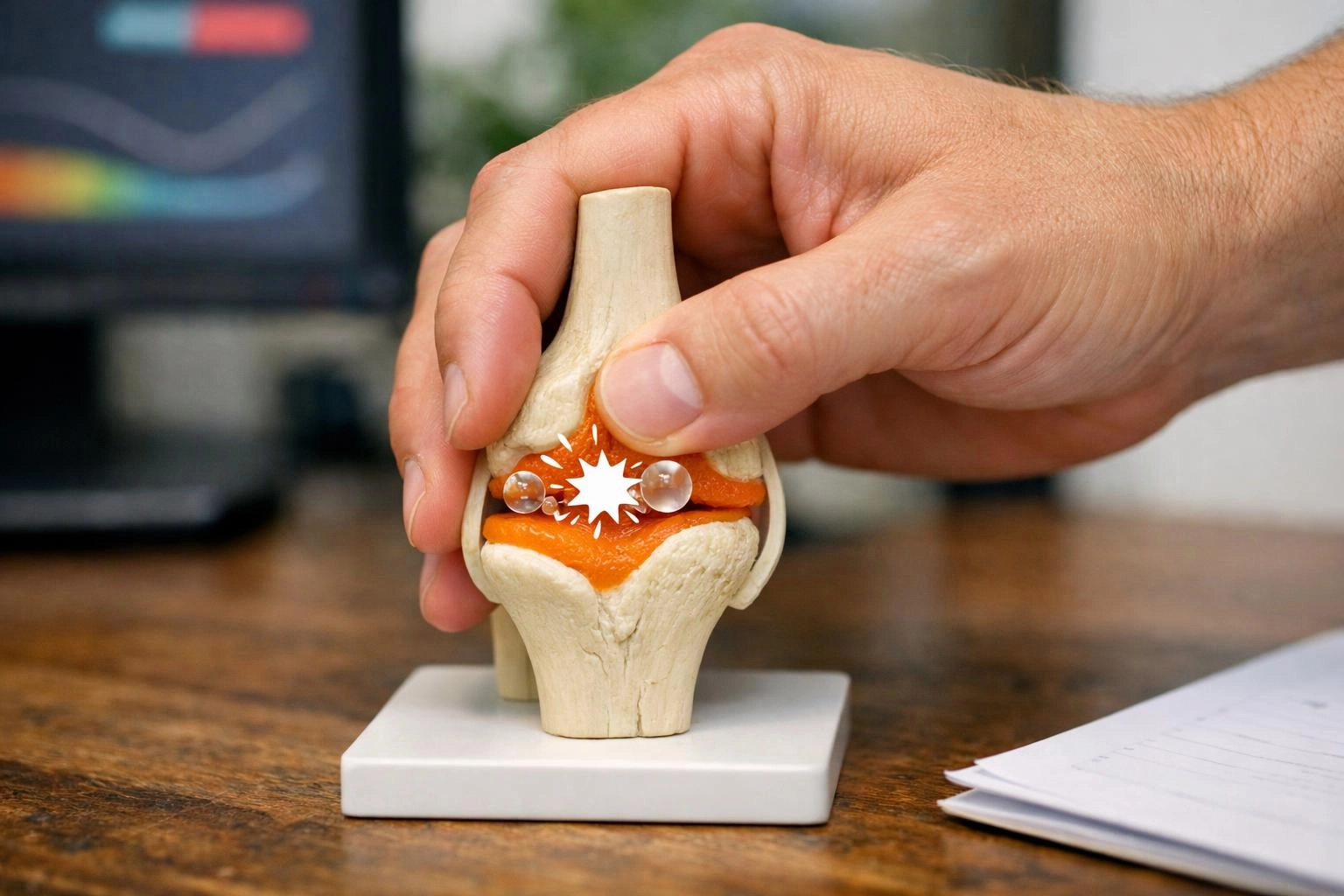
From the Arrowhead Clinic Chiropractor Savannah team
When we discuss joint cavitation during a chiropractic adjustment, we explain that a sound isn't the goal. We also consider how the joint moves and how you respond to the adjustment. Your feedback helps us understand what you feel during care.
Joint Cavitation in Practice: A Real-World Example
During a back adjustment, you might hear a pop as the chiropractor moves a spinal joint. The chiropractor may ask how the movement felt and check how your back moves afterward.
Related Services
Related Terms
Facet Joint
A facet joint is a small joint that connects neighboring bones in the spine.
Range of Motion
Range of Motion is the amount of movement available at a joint in a particular direction.
Activator Method
The Activator Method is a chiropractic technique that uses a handheld instrument to apply a controlled thrust to a joint.
Arrowhead Clinic Chiropractor Savannah
Have Questions About Joint Cavitation?
Contact Arrowhead Clinic Chiropractor Savannah for practical guidance on Joint Cavitation and related chiropractor work in Savannah.