
What Is Electromyography?
Electromyography is a test that records electrical activity in muscles. It helps show how muscles respond when they are relaxed and when they contract. The results can help a clinician investigate symptoms such as weakness or tingling and look for signs of a muscle or nerve problem.
Quick Facts About Electromyography
- Category
- Muscle and nerve test
- Used for
- Investigating weakness or tingling
- Common confusion
- A nerve conduction study is a separate test
- Also called
- EMG
- Often discussed with
- Sciatica Treatment
Key Takeaways About Electromyography
- A needle electrode records activity inside the muscle.
- Results are interpreted alongside your symptoms and exam.
- EMG and a nerve conduction study aren't the same test.
How Electromyography Works
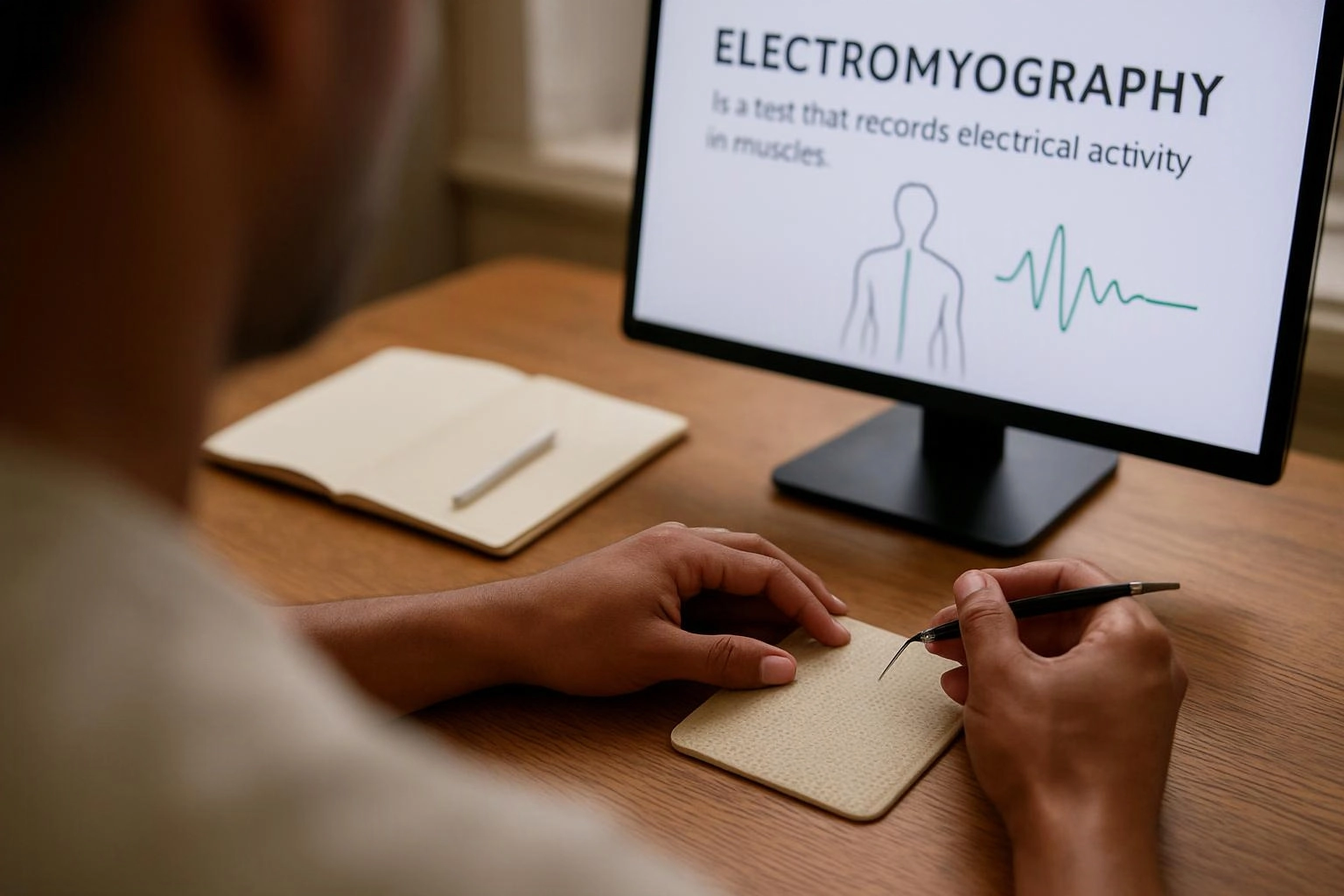
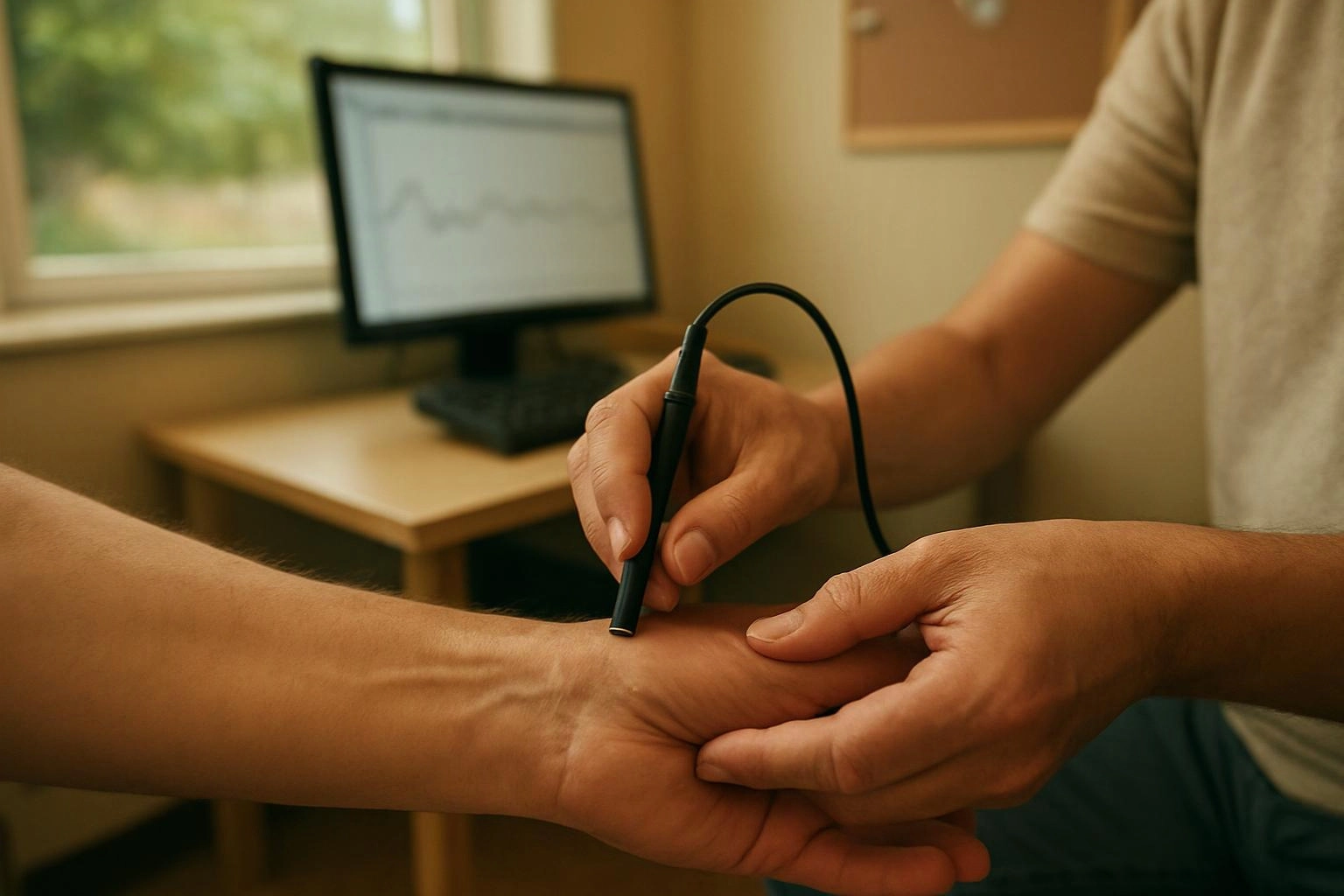
During electromyography, a clinician places a thin needle electrode into a selected muscle. The electrode detects signals at rest and during gentle movement. A machine displays the signals for the clinician to interpret. Related service: Sciatica Treatment.
Related glossary terms: Lumbar Radiculopathy, Nerve Root, Muscle Spasm.
The pattern of activity helps the clinician assess how the muscle is working. For example, activity at rest may offer a different clue than activity during a contraction. The clinician considers the pattern alongside your symptoms and physical exam.
A nerve conduction study is a separate test that often accompanies EMG. It uses electrodes on the skin to check how signals travel along a nerve. Together, the findings can help a clinician tell whether symptoms may involve a nerve or a muscle.
From the Arrowhead Clinic Chiropractor Savannah team
When we discuss sciatica symptoms, we consider how pain and weakness affect your daily movements. An EMG report can add context to that discussion. We look at the findings alongside your symptoms rather than treating the report as the whole picture.
Electromyography in Practice: A Real-World Example
A person seeking sciatica treatment has leg pain and weakness. An EMG report may help the care team understand whether the weakness involves a nerve affecting the leg muscles.
Related Services
Related Terms
Lumbar Radiculopathy
Lumbar Radiculopathy is a condition in which a nerve root in the lower back becomes irritated or compressed.
Nerve Root
A nerve root is a bundle of nerve fibers that connects a spinal nerve to the spinal cord.
Muscle Spasm
A muscle spasm is an involuntary tightening of a muscle that you cannot control.
Piriformis Syndrome
Piriformis Syndrome is a condition in which the piriformis muscle in the buttock is thought to irritate the nearby sciatic nerve.
Arrowhead Clinic Chiropractor Savannah
Have Questions About Electromyography?
Contact Arrowhead Clinic Chiropractor Savannah for practical guidance on Electromyography and related chiropractor work in Savannah.